
28.09.2026
An aching ear usually sends people to think about infections, colds or wax. But when the ear itself looks healthy and the pain keeps coming back, the cause is often a little further forward, in the jaw. Teeth grinding and clenching put steady pressure on the jaw joint and the muscles around it, and that strain is frequently felt in and around the ear. Recognising the link between bruxism and ear pain is often the first step towards effective teeth grinding treatment in London.
This guide looks at bruxism and ear pain in detail: why grinding affects the ears, what the pain typically feels like, how to tell whether your ear pain is coming from your teeth or jaw, and what can be done to relieve it.
Can Teeth Grinding Cause Ear Pain?
Yes, it can. Many people are surprised to learn that teeth grinding can affect your ears, but it’s a common pattern in dental sleep medicine. Grinding and clenching overwork the jaw muscles and load the temporomandibular joint, or TMJ, which sits just in front of the ear canal. When these structures become strained or inflamed, the discomfort is often felt as earache rather than jaw pain.
Because much of this grinding happens during sleep, many people have no idea they’re doing it. They simply wake with an aching ear, a tight jaw or a dull headache and assume something else is to blame. This is one reason bruxism and ear pain are so often overlooked as a pair.
Why Bruxism Causes Jaw and Ear Pain
There are three main reasons why bruxism and ear pain so often go together.
- The jaw joint sits right next to the ear. The TMJ lies only a short distance in front of the ear canal. Inflammation or pressure in the joint can easily be felt as pain deep inside the ear.
- Overworked muscles. Grinding and clenching fatigue the chewing muscles at the side of the face and temples. Tight, tender muscles in this area can produce an ache that spreads to the ear, cheek and side of the head.
- Shared nerve pathways. The jaw and the ear share nerve supply, so the brain can struggle to tell exactly where the pain is coming from. This is known as referred pain, and it’s why TMJ ear pain can feel convincingly like an ear problem.
Stress plays a big part in all three, as it’s one of the most common triggers for clenching. There’s more on this in our guide to dealing with stress and TMD.
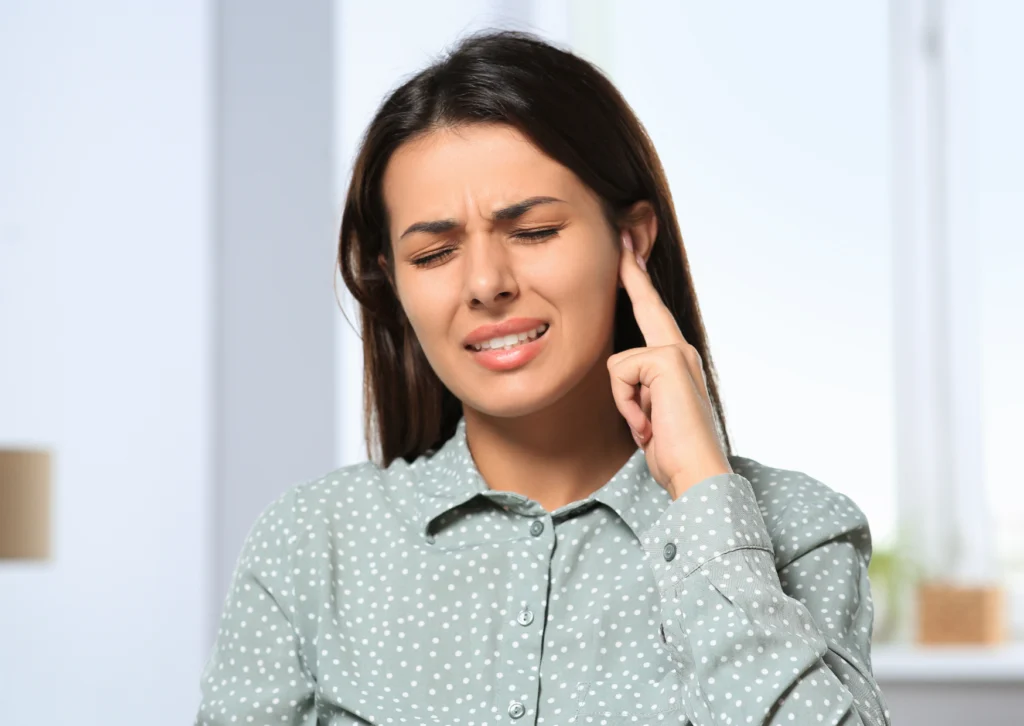
What Bruxism-Related Ear Pain Feels Like
Bruxism ear pain tends to follow a recognisable pattern. You may notice:
- A dull ache in or just in front of the ear, often on one side
- Pain that’s worse on waking, after a night of grinding, or later in the day after clenching during work
- A feeling of fullness, pressure or blockage in the ear
- Clicking, popping or grating when you open your mouth or chew
- Jaw stiffness, tenderness in the cheeks or temples, and tension headaches
Some people also notice ringing or buzzing in the ear. This is a separate symptom with its own causes, but jaw clenching and ear pain can both appear alongside it.
How to Tell If Ear Pain Is from Your Teeth or Jaw
It isn’t always easy to know where ear and jaw pain is coming from, and there are many possible causes. The following signs point more towards the jaw than the ear:
- The pain changes when you chew, yawn or open your mouth wide
- The area in front of the ear feels tender when you press on it
- Your teeth show signs of wear, chips or flattened edges
- A partner has heard you grinding at night
- Your GP has checked your ears and found nothing wrong
On the other hand, a fever, discharge from the ear, sudden hearing loss, or pain after a cold or swimming are more typical of an ear infection. In these cases, see your GP first. Severe or persistent jaw and ear pain should always be checked by a professional rather than assumed to be grinding.
What Happens If Teeth Grinding Is Left Untreated?
Occasional grinding may cause no lasting harm, but regular bruxism can gradually take its toll. Over time it can lead to worn, chipped or sensitive teeth, cracked fillings and crowns, ongoing jaw joint problems, recurring headaches and persistent ear discomfort. The longer the grinding continues, the more wear accumulates, and dental damage can’t reverse itself. For people with bruxism and ear pain, treating the grinding early also shortens the time spent in discomfort.
Bruxism and Veneers
Dental work is particularly vulnerable. Veneers are strong, but the forces produced during night-time grinding can chip them, crack them or loosen their bond with the tooth. If you have veneers and grind your teeth, it’s worth discussing protection with your dentist. A custom night guard for veneers can help protect your investment while also easing strain on the jaw.
How to Get Rid of Ear Pain from Grinding Teeth
Treating the grinding itself is the most reliable way to ease both bruxism and ear pain. A combination of approaches usually works best.
Custom Night Guards and Oral Appliances
A custom-made night guard, sometimes called an occlusal splint, is worn over the teeth during sleep. It creates a protective barrier between the upper and lower teeth, reduces the pressure on the jaw joint and helps the muscles relax. Unlike off-the-shelf guards, a custom appliance is shaped precisely to your bite, which makes it more comfortable and less likely to affect the jaw position in unhelpful ways. For TMJ ear pain linked to grinding, this is usually the first line of treatment.
Jaw Relaxation and Self-Care
Simple daily habits can take pressure off the joint. Try to keep your lips together and teeth apart during the day, as the teeth shouldn’t touch at rest. Warm compresses on the side of the face, gentle jaw stretches, softer foods during flare-ups and avoiding chewing gum can all ease teeth grinding ear pain.
Managing Stress
Because stress and clenching are so closely connected, finding ways to wind down can make a real difference. Regular exercise, a calmer bedtime routine and relaxation techniques all help. Our article on the connection between bruxism and stress covers practical strategies in more detail.
Checking for Sleep-Related Causes
Sleep bruxism is often linked to disturbed sleep, and in some people it occurs alongside snoring or sleep apnoea. If you grind your teeth and also snore loudly, wake unrefreshed or feel tired during the day, it’s worth mentioning this at your assessment. Factors such as sleep patterns and age can influence bruxism too, so a full picture of your sleep helps guide the right treatment.
Getting Help for Bruxism in London
If you’re living with recurring jaw and ear pain, a specialist assessment can confirm whether bruxism and ear pain are linked in your case and rule out other problems. A consultation typically includes a discussion of your symptoms and sleep, an examination of your teeth, jaw joints and chewing muscles, and a check for signs of wear or damage to existing dental work.
If a night guard or oral appliance is recommended, impressions or scans are taken so it can be made to fit precisely, followed by a fitting appointment and reviews to make sure it’s working well. Appointments are available at Wimpole Street, The Shard and Cromwell Hospital, so there’s a convenient location wherever you are in London.
Final Thoughts
The link between bruxism and ear pain is easy to miss, because the discomfort is felt in the ear rather than the teeth. Yet for many people, treating the grinding is what finally brings relief. If your earache keeps returning without an obvious ear problem, and especially if you notice jaw tension, headaches or worn teeth, it’s worth having your jaw assessed.
If ear or jaw pain is affecting your daily life, Dr Aditi Desai and her team can help identify the cause and recommend a treatment that suits you, with appointments at Wimpole Street, The Shard and Cromwell Hospital in London. Book your consultation to take the first step towards lasting relief.
Frequently Asked Questions
Can bruxism cause ear pain?
Yes. Grinding strains the jaw joint and muscles, which sit very close to the ear. This can cause earache, a feeling of fullness or pressure, and sometimes ringing in the ear.
How can I tell if ear pain is from my teeth?
Pain that changes when you chew or yawn, tenderness in front of the ear and signs of tooth wear all point towards the jaw. If you have a fever, discharge or hearing loss, see your GP to rule out an infection.
Will ear pain from bruxism go away?
In most cases, bruxism and ear pain improve together once the grinding is treated and the jaw muscles have a chance to relax. Without treatment, the pain tends to come and go for as long as the grinding continues.
Can a night guard help with ear pain?
A custom night guard can reduce pressure on the jaw joint and ease muscle tension, which often relieves ear pain linked to grinding. It also protects your teeth and any dental work from further wear.
What happens if teeth grinding is left untreated?
Over time it can wear down and chip teeth, damage fillings, crowns and veneers, and lead to ongoing jaw, ear and head pain. Early treatment helps prevent lasting damage.
 Book Consultation