
28.09.2026
Ringing, buzzing or humming in the ears is usually linked to noise exposure or hearing changes. But for some people, the source lies in the jaw. Teeth grinding and clenching place constant strain on the jaw joint and the muscles around it, and these structures are closely connected to the ear. If you’ve noticed that the sound gets louder when your jaw feels tight, it’s worth asking whether bruxism treatment in London could be part of the answer.
So, can bruxism cause tinnitus? This guide explains the connection, how to recognise tinnitus that’s linked to the jaw, and what can be done to find relief.
What Is Tinnitus?
Tinnitus is the experience of hearing a sound that doesn’t come from an outside source. People describe it as ringing, buzzing, hissing, whistling or humming, and it can be constant or come and go. It may affect one ear or both.
Tinnitus isn’t a condition in itself but a symptom, and it has many possible causes. Age-related hearing loss, loud noise, ear infections, earwax and certain medications are among the most common. Problems with the jaw and neck are less well known, but they are a recognised cause.
Can Bruxism Cause Tinnitus?
Yes, bruxism can cause tinnitus or make existing tinnitus worse. Studies have found that tinnitus is more common in people with jaw joint problems, and many people who grind or clench their teeth report ringing or buzzing alongside jaw pain, headaches or a feeling of fullness in the ear.
That doesn’t mean everyone who grinds their teeth will develop tinnitus, or that all tinnitus comes from the jaw. But when the two appear together, the link between bruxism and tinnitus is worth investigating, because treating the grinding can sometimes ease the sound.
How Teeth Grinding and Jaw Clenching Affect the Ears
People often ask: can teeth grinding cause tinnitus? The answer lies in how closely the jaw and ear are connected, and there are several reasons teeth grinding and tinnitus can be linked.
- The jaw joint sits beside the ear. The temporomandibular joint, or TMJ, lies just in front of the ear canal. Strain, inflammation or tension in this area can affect the delicate structures of the ear nearby.
- Shared nerves. The nerve that controls the chewing muscles also supplies small muscles inside the middle ear. When the jaw muscles are overworked, these ear muscles can be affected too.
- Signals in the brain. Nerve signals from the jaw and neck feed into the same parts of the brain that process sound. Constant tension from clenching can change how these areas behave, which may be experienced as tinnitus.
Stress often ties these factors together. It’s one of the main triggers for clenching, and it can also make tinnitus feel louder and more intrusive. Our article on the connection between bruxism and stress explores this in more detail.
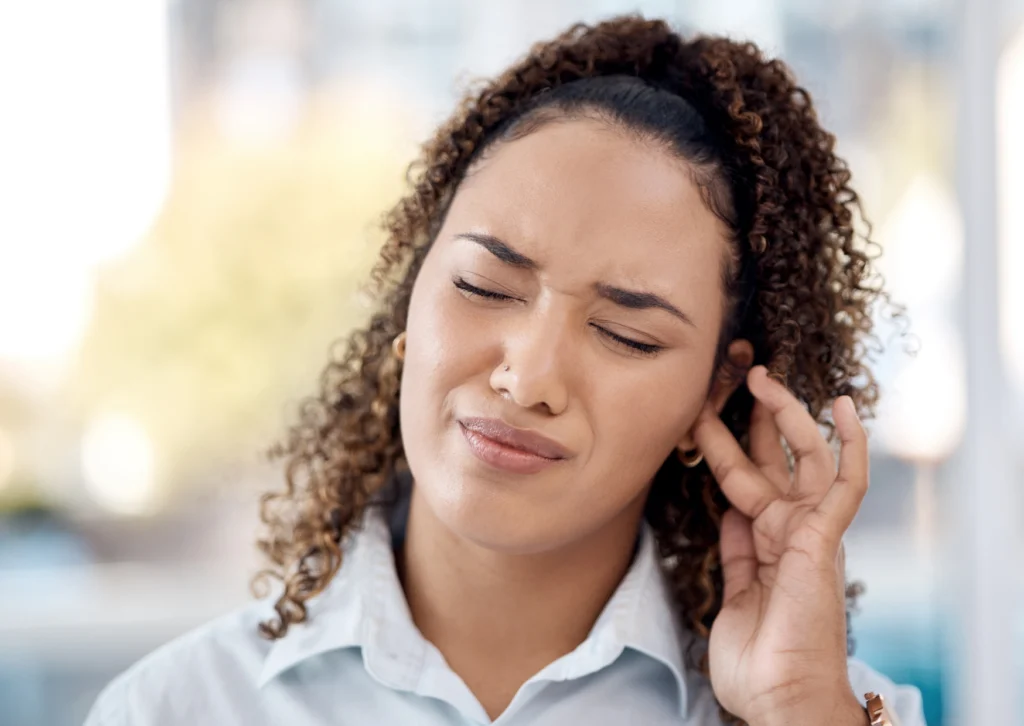
What Is Somatic Tinnitus?
When tinnitus is influenced by movement or tension in the body, it’s known as somatic tinnitus, or somatosensory tinnitus. The key feature is that the sound changes when you move or press on certain areas, most often the jaw, head or neck.
Bruxism tinnitus is one form of this. The grinding itself doesn’t produce the sound, but the tension it creates in the jaw can alter the signals the brain receives, changing the pitch or loudness of the tinnitus. TMJ tinnitus, where the sound is linked to a jaw joint disorder, follows the same pattern and often sits alongside grinding.
How Do I Know If My Tinnitus Is Caused by My Jaw?
If you’re asking can bruxism cause tinnitus in your own case, only a proper assessment can confirm it. However, these signs suggest bruxism tinnitus or TMJ tinnitus may be involved:
- The sound changes when you clench your teeth, open your mouth wide or move your jaw from side to side
- The tinnitus is worse on waking, after a night of grinding, or during stressful periods
- You also have jaw pain, clicking, stiffness or tension headaches
- Your teeth show signs of wear, or a partner has heard you grinding at night
- A hearing test hasn’t found a clear explanation
Some symptoms need prompt medical attention whatever the suspected cause. See your GP or seek urgent advice if you notice sudden hearing loss, tinnitus that beats in time with your pulse, tinnitus in one ear with hearing loss, dizziness or vertigo, or any weakness in the face. These are not typical of jaw clenching tinnitus and should be checked quickly.
How to Find Relief from Bruxism Tinnitus
If bruxism and tinnitus are linked in your case, reducing the strain on the jaw is the most direct route to relief. It’s important to be realistic: tinnitus often has more than one cause, and treating the jaw won’t always silence it completely. For many people, though, it makes the sound quieter or less frequent.
Custom Night Guards
A custom-made night guard, sometimes called an occlusal splint, is worn over the teeth during sleep. It reduces the force of grinding, protects the teeth and helps the jaw muscles relax. Because it’s made to fit your bite precisely, it’s more comfortable and more effective than an off-the-shelf guard, and it’s often the first step in treating jaw tinnitus linked to grinding.
Relaxing the Jaw During the Day
Many people clench without realising it, particularly when concentrating or under pressure. Try to keep your lips together and your teeth slightly apart at rest. Gentle jaw stretches, warm compresses on the side of the face and cutting out chewing gum can all reduce muscle tension.
Stress and Sleep
Because stress drives clenching and makes tinnitus harder to ignore, managing it helps on both fronts. Regular exercise, relaxation techniques and a calmer evening routine are all worthwhile. Sleep matters too, as sleep patterns and age can influence bruxism. If you also snore or wake unrefreshed, mention this at your assessment, as grinding can sometimes occur alongside sleep apnoea.
Jaw joint problems and stress are closely linked as well, and there’s practical advice in our guide to dealing with stress and TMD.
Working Alongside Hearing Specialists
Tinnitus is best managed as a team. An audiologist or ENT specialist can check your hearing, rule out other causes and offer tinnitus management such as sound therapy or counselling approaches. Treating the jaw works well alongside this, and a dental sleep medicine specialist can focus on the grinding while hearing specialists support the tinnitus itself.
Getting Help in London
If you suspect your tinnitus is linked to grinding or clenching, an assessment of your jaw and bite is a sensible next step. A consultation typically includes a discussion of your symptoms and sleep, an examination of your teeth, jaw joints and chewing muscles, and checks for signs of wear. If a night guard is recommended, it’s made from impressions or scans of your teeth and fitted and reviewed to make sure it’s comfortable and effective.
Appointments are available at Wimpole Street, The Shard and Cromwell Hospital, making it easy to find a convenient location in London. Looking at tinnitus and bruxism together often gives a fuller picture than treating either one alone.

Final Thoughts
So, can bruxism cause tinnitus? For some people, yes. Grinding and clenching strain the jaw, and because the jaw and ear are so closely connected, that strain can show up as ringing or buzzing. If your tinnitus changes when you move your jaw, or comes with jaw pain, headaches or worn teeth, treating the grinding may bring real relief, ideally alongside advice from a hearing specialist.
If you think grinding or clenching may be behind your tinnitus, Dr Aditi Desai and her team can assess your jaw and recommend a treatment that suits you, with appointments at Wimpole Street, The Shard and Cromwell Hospital in London. Book your consultation to take the first step towards quieter days and nights.
Frequently Asked Questions
Will tinnitus from TMJ go away?
It often improves once the jaw problem is treated and the muscles relax. Some people find it fades completely, while others notice it becomes quieter or less frequent. Results vary, as tinnitus can have more than one cause.
How do I know if my tinnitus is TMJ related?
A strong clue is that the sound changes when you clench, open your mouth or move your jaw. Jaw pain, clicking and headaches alongside the tinnitus also point towards the jaw.
Is somatic tinnitus permanent?
Not necessarily. Because it’s linked to tension in the jaw, head or neck, treating the underlying cause can reduce or sometimes resolve it. How much it improves depends on the individual.
How do you fix somatic tinnitus?
Treatment focuses on the source of the tension. For jaw-related tinnitus, this may include a custom night guard, jaw relaxation, stress management and support from a hearing specialist.
Can a night guard help with tinnitus?
If your tinnitus is linked to grinding or clenching, a custom night guard can reduce strain on the jaw and may ease the sound. It won’t help tinnitus caused by other factors, such as noise damage, which is why an assessment is important.
 Book Consultation