
28.09.2026
Most people think of snoring as a single problem with a single cause. In reality, the sound can come from several places in the airway, and one of the most common is the soft palate. When this soft tissue at the back of the mouth relaxes during sleep, it can flutter as air passes over it, producing the familiar rattling noise that keeps partners awake. For anyone looking for snoring treatment in London, knowing where the sound starts is the first step.
Understanding soft palate snoring matters because it changes which treatments are likely to help. This guide explains what the soft palate does, why it vibrates, how to tell whether your snoring starts there, and which non-surgical options are available.
What Is the Soft Palate and Why Does It Cause Snoring?
The roof of your mouth has two parts. The front section, the hard palate, is bone covered with tissue. Behind it sits the soft palate, a flexible band of muscle and tissue that ends in the uvula, the small fleshy structure you can see hanging at the back of your throat.
During the day, the soft palate helps you swallow and speak by lifting to close off the nasal passage. At night, the muscles that hold it in place relax. For many people this causes no trouble, but if the airway behind the soft palate is narrow, the tissue can sag into the path of the air. As you breathe in, it vibrates against the back of the throat, and that vibration is what you hear. When people ask what causes snoring, this fluttering of the soft palate is one of the most common answers.
So, can a soft palate cause snoring? Yes. It’s one of the most frequent sources of the sound, and snoring and the soft palate are closely linked in both adults who snore occasionally and those who snore every night.
What Makes the Soft Palate Vibrate More
Several factors make soft palate snoring more likely. Often, more than one is involved at the same time.
- A long or low soft palate. Some people are born with an elongated soft palate or a long uvula, which leaves less room in the airway and gives the tissue more length to flutter.
- Loss of muscle tone. The muscles of the palate and throat lose some firmness with age, so tissues that stayed in place years ago can begin to sag during sleep.
- Alcohol and sedatives. These relax the throat muscles further, which is why snoring is often louder after an evening drink.
- Nasal congestion. A blocked nose pushes you to breathe through your mouth, and mouth breathing encourages the soft palate to vibrate.
- Weight gain. Extra tissue around the neck can narrow the airway and increase pressure on the soft tissues of the throat.
- Sleeping on your back. Gravity pulls the soft palate and tongue backwards when you lie flat, narrowing the space behind them.
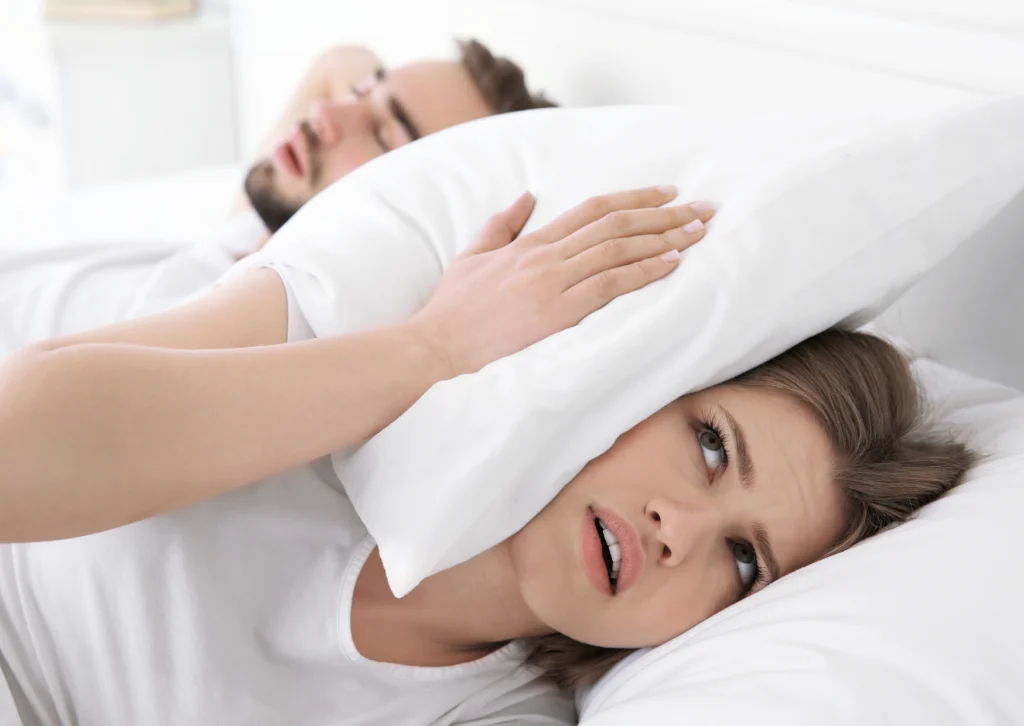
Types of Snoring: Is Yours Coming from the Soft Palate?
Snoring specialists usually describe three main types of snoring, depending on where the sound starts.
- Nasal snoring comes from a blocked or narrowed nose. Allergies, colds and structural issues play a role, and a deviated septum can cause snoring by restricting airflow on one side.
- Tongue-based snoring happens when the tongue falls back towards the throat during sleep. It’s common in people who sleep on their backs.
- Palatal snoring (or soft palate snoring) comes from the soft palate and uvula vibrating. It tends to produce a deep, fluttering sound and is often worse with the mouth open.
A simple check at home can give you a rough idea. Close your mouth and try to make a snoring sound. If you can’t, but you can when your mouth is open, soft palate snoring linked to mouth breathing may be the cause. If you can snore with your mouth closed, the tongue may be playing a part. This isn’t a diagnosis, and many people have a mix of types, but it’s a useful starting point for a conversation with a specialist.
Swollen Uvula from Snoring
Because the uvula sits at the tip of the soft palate, it takes much of the vibration during a night of snoring. Over time this can leave it red and puffy. A swollen uvula from snoring often comes with a dry or scratchy throat on waking, a feeling that something is stuck at the back of the mouth, or a need to clear the throat repeatedly.
In most cases the swelling settles during the day once the vibration stops. Keeping hydrated, cutting back on alcohol in the evening and treating nasal congestion can all help. If the swelling is severe, doesn’t go down, or makes it hard to swallow or breathe, see your GP promptly, as these symptoms can have other causes that need checking.
Is Soft Palate Snoring a Sign of Sleep Apnoea?
Soft palate snoring isn’t always a sign of sleep apnoea. Plenty of people snore without any other problems, which answers another common question: do healthy people snore? They do, particularly when they’re tired, congested or have had a drink.
However, the same narrowing that makes the soft palate vibrate can, in some people, close the airway completely for short periods. This is obstructive sleep apnoea. Signs that snoring may be more than just noise include:
- Pauses in breathing that a partner notices, followed by gasping or choking
- Waking up unrefreshed even after a full night in bed
- Daytime sleepiness, poor concentration or morning headaches
- Waking frequently during the night to use the toilet
If any of these sound familiar, it’s worth arranging an assessment. Loud, regular snoring is also linked to the wider effects of snoring on health, including disturbed sleep for both you and your partner.
How to Stop Soft Palate Snoring
The right approach depends on what’s driving your snoring and how often it happens. For many people, a combination of the options below works better than any one on its own.
Throat and Soft Palate Exercises
Some studies suggest that exercises to stop snoring, sometimes called oropharyngeal or myofunctional exercises, can reduce snoring intensity by strengthening the muscles of the throat and palate, which may help with soft palate snoring. Examples of throat exercises for snoring include:
- Saying a long “ahh” while consciously lifting the soft palate and uvula, then relaxing, repeated several times
- Pressing the tip of the tongue against the roof of the mouth and sliding it backwards
- Singing vowel sounds clearly and firmly, which works the palate muscles
Soft palate exercises need to be done daily for several weeks before any change is likely. They’re a sensible addition to treatment but rarely enough on their own for persistent or loud snoring. Mouth exercises for snoring should never replace an assessment if you have signs of sleep apnoea.
Lifestyle Changes
Small changes can reduce how much the soft palate vibrates. Avoiding alcohol for a few hours before bed, keeping to a healthy weight, treating nasal congestion and staying well hydrated all help. Sleeping position can make a real difference too, and there’s more detail in our guide to the best position to sleep for apnoea, which applies to snoring as well.
Mandibular Advancement Devices
For soft palate snoring treatment that works night after night, a custom-made oral appliance is one of the most effective non-surgical options. A mandibular advancement device is worn over the teeth during sleep and holds the lower jaw slightly forward. This tightens the tissues at the back of the throat and opens the space behind the soft palate and tongue, so there is less room for vibration. You can read more about how a mandibular advancement device works for snoring.
A device made by a dental sleep medicine specialist differs from an over-the-counter mouth guard for snoring. It’s shaped to your teeth and jaw, adjusted gradually to find the most comfortable and effective position, and reviewed over time to protect your teeth and jaw joints.
Getting Help for Snoring in London
If snoring is affecting your sleep or your relationship, a consultation with a dental sleep medicine specialist in London can help you understand where the sound is coming from and which treatment is likely to suit you.
A typical assessment includes a detailed sleep history, often with input from your partner, an examination of your mouth, teeth, jaw and airway, and a discussion of any symptoms that could point to sleep apnoea. Where needed, a sleep study can be arranged to rule it out. If an oral appliance is suitable, impressions or scans are taken so the device can be made to fit you precisely, followed by fitting and adjustment appointments.
Appointments with Aditi Desai are available at Wimpole Street, The Shard and Cromwell Hospital, making it easy to find a location that fits around work and home.
Final Thoughts
Soft palate snoring is one of the most common forms of snoring, and the good news is that it responds well to the right treatment. Exercises and lifestyle changes can reduce the vibration, while a custom mandibular advancement device offers a reliable, non-surgical way to keep the airway open through the night. If your snoring is loud, regular or comes with daytime tiredness, a professional assessment is the best next step.
Frequently Asked Questions
How do I stop my soft palate from snoring?
Start with lifestyle changes such as avoiding alcohol before bed, sleeping on your side and treating nasal congestion. Daily throat exercises may help strengthen the palate. For persistent snoring, a custom mandibular advancement device is one of the most effective non-surgical options.
Can a soft palate cause snoring?
Yes. When the soft palate relaxes during sleep, it can vibrate as air passes over it. This is one of the most common causes of snoring, especially in people who breathe through their mouth at night.
Do healthy people snore?
They do. Many healthy people snore occasionally, particularly when tired, congested or after drinking alcohol. Loud snoring every night, or snoring with pauses in breathing, should be assessed.
Can exercises fix soft palate snoring?
Exercises may reduce snoring for some people, but they need to be done consistently for several weeks. They work best alongside other treatment rather than as the only solution.
Is a swollen uvula from snoring serious?
Usually not. The swelling tends to settle during the day once the vibration stops. See your GP if it’s severe, doesn’t improve, or makes breathing or swallowing difficult.
Book a Consultation with Dr Aditi Desai
If you’d like to understand what’s causing your snoring and find a treatment that works, Dr Aditi Desai and her team offer specialist assessments at Wimpole Street, The Shard and Cromwell Hospital in London. Book your consultation to take the first step towards quieter, more restful nights.
 Book Consultation

