
17.04.2026
If your snoring gets worse every spring or autumn, seasonal allergies could be the reason. The link between seasonal allergies and snoring is well established, but it’s often overlooked because the two problems seem unrelated at first glance. Understanding how they connect can point you toward the right solution and, in many cases, a noticeably quieter night.
Here, a snoring and sleep specialist explains how allergies trigger and worsen snoring, and what you can do about it.
How Allergies Cause Snoring
When you’re exposed to an allergen such as pollen, grass, or mould, your immune system responds by releasing histamine. Histamine causes the lining of the nasal passages to swell and produce more mucus. The result is the congestion that makes allergies so uncomfortable during the day.
At night, that same congestion becomes a snoring trigger. When your nose is blocked, you’re forced to breathe through your mouth. Mouth breathing bypasses the nasal passages that normally warm, filter, and humidify incoming air, and it pulls air across the soft tissues at the back of the throat at a higher velocity. That increased airflow causes the soft palate and uvula to vibrate, which is the sound you hear as snoring.
The more congested you are, the more likely you are to breathe through your mouth during sleep, and the louder the snoring tends to be.
Why Seasonal Allergies Make Snoring Worse
This connection goes beyond simple nasal congestion. Allergic inflammation also affects the throat and upper airway more broadly, making the tissues there more reactive and more prone to vibrating.
Postnasal drip, which is common with allergies, adds to the problem. Mucus draining down the back of the throat can partially obstruct the airway and trigger further irritation, both of which contribute to snoring. Some people also experience swollen tonsils or adenoids as part of their allergic response, which narrows the airway further.
The seasonal pattern matters too. Many people who snore mildly or occasionally year-round find that their snoring becomes much more pronounced and regular during peak pollen seasons. If you or your partner has noticed that the snoring is significantly worse at certain times of year, seasonal allergies are a very likely factor.
The Snoring and Allergies Cycle
One of the less obvious aspects of the snoring and allergies relationship is that each can make the other worse. Snoring involves repeated vibration and mild trauma to the tissues of the upper airway, which can increase local inflammation over time. That inflammation makes the airway more reactive to allergens, which worsens the congestion, which worsens the snoring.
Poor sleep also weakens immune regulation more broadly. When your sleep is consistently broken by snoring, your body’s ability to manage inflammatory responses, including allergic ones, is reduced. This means that untreated snoring can effectively make your allergy symptoms harder to control.
Addressing both problems together, rather than treating only one, tends to produce better results.
Seasonal Allergies vs Year-Round Triggers
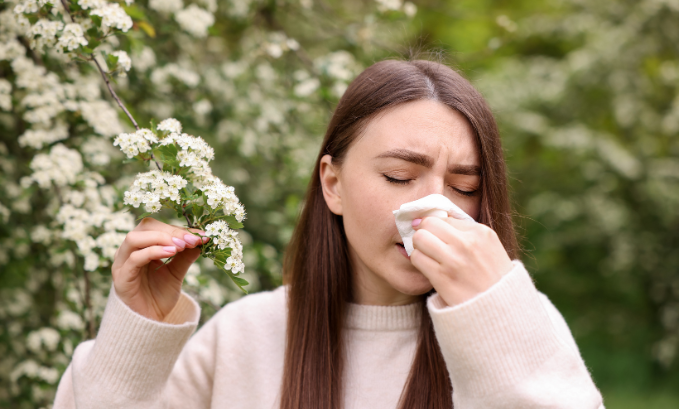
Not all allergy-related snoring follows a seasonal pattern. Some people are sensitive to year-round triggers such as dust mites, pet dander, or mould spores indoors, and for them, the snoring and allergies connection doesn’t switch off in winter.
If your snoring is consistently worse in spring or summer and noticeably improves in autumn and winter, this seasonal pattern is a strong indicator that pollen or outdoor allergens are involved. Seasonal allergies and snoring that follow this rhythm are usually easier to manage because the exposure is predictable and the treatment approach can be planned ahead of time.
If the pattern doesn’t track clearly with seasons, year-round allergens in your sleeping environment are more likely to be involved, and it’s worth considering factors such as your bedding, ventilation, and whether pets sleep near your bedroom. In some cases, both seasonal and perennial triggers overlap, which is why the symptoms can seem inconsistent from one month to the next.
Keeping a simple diary of when snoring is worst, alongside pollen count data and any changes to your sleeping environment, can help identify the pattern and guide the most effective approach.
Who Is Most Affected?
This combination is more likely to cause serious sleep disruption in some people than in others. Those most affected include:
- People with moderate to severe hay fever or other seasonal allergies whose nasal passages become significantly congested
- Those who already snore occasionally at other times of year, whose snoring intensifies during allergy season
- People with a naturally narrow airway, where even mild congestion is enough to trigger significant breathing changes during sleep
- Mouth breathers, who are already relying on oral airflow and have little reserve when congestion worsens
- People with untreated sleep apnoea, for whom allergy-related airway narrowing adds to an already compromised breathing pattern
Managing Seasonal Allergies to Reduce Snoring
There are several practical approaches to breaking the snoring and allergies cycle. Most people benefit from addressing both the allergy and the airway directly.
Reduce Your Allergen Exposure
The most effective step is reducing how much allergen you’re exposed to in the first place. During high pollen periods, keeping windows closed in the evenings, showering before bed to remove pollen from hair and skin, and changing bedding more frequently can all reduce the allergen load in your sleeping environment. An air purifier with a HEPA filter in the bedroom is a practical investment for anyone whose sleep is routinely disrupted during pollen season.
Address the Snoring Directly
If congestion is managed but snoring continues, it’s worth considering whether the snoring has an additional structural or positional component that the allergies are revealing rather than causing. A deviated nasal septum can make allergy-related congestion significantly worse, for example, because there’s less room for airflow to adapt.
Sleeping on your side rather than your back reduces the tendency for soft tissues to fall back and narrow the airway. Elevating the head of the bed slightly can also help reduce postnasal drip pooling at the back of the throat.
When Snoring Is More Than an Allergy Problem
Seasonal allergies and snoring often explain each other, but not always. If your snoring is loud, frequent, and accompanied by excessive daytime tiredness, morning headaches, or gasping during sleep, it’s important to consider whether obstructive sleep apnoea may also be present. Sleep apnoea is a common condition that’s frequently mistaken for straightforward snoring, and allergies can mask it by providing a seemingly complete explanation for the symptoms.
A specialist assessment can determine whether the snoring has a component that goes beyond allergy management and identify the most effective treatment approach. For many patients, a custom oral appliance for snoring is a highly effective solution that works alongside allergy management rather than replacing it.
Frequently Asked Questions
Can seasonal allergies cause snoring even if I don’t usually snore?
Yes. Significant nasal congestion from allergies can trigger snoring in people who don’t snore at other times of year. If it happens consistently every allergy season, it’s a reliable sign that the congestion is directly affecting your airway during sleep.
Does treating allergies always stop the snoring?
It often helps considerably, particularly if congestion is the main driver. But the relationship between seasonal allergies and snoring doesn’t always resolve completely with allergy treatment alone. If there’s an underlying structural issue or sleep apnoea present, a specialist assessment is the best way to understand what’s contributing.
How do I know if my snoring is caused by allergies or something else?
A clear seasonal pattern, alongside nasal congestion, itchy eyes, or other allergy symptoms, strongly suggests allergies are involved. If the snoring persists outside of allergy season, or if you experience daytime fatigue and waking during the night, it’s worth getting a proper evaluation.
Your Next Step
If snoring during allergy season is disrupting your sleep, Dr. Aditi Desai offers expert assessments and personalised treatment plans, including custom oral appliance therapy, at her London practices.
Book a consultation to understand what’s driving your snoring and find the right solution.
Dr. Aditi Desai is the President of the British Society of Dental Sleep Medicine, with 48 years of experience in the dental field. She specialises in sleep apnoea, snoring, bruxism, and TMD treatment at her practices on Wimpole Street, The Shard, and Cromwell Hospital in London.
 Book Consultation

