27.11.2026
If your partner says you make long, eerie groaning noises during the night, you may have a little-known sleep condition called catathrenia. Because the sounds are so unusual, they’re often mistaken for snoring, sleep talking or even signs of distress. In reality, catathrenia is a distinct breathing pattern that happens during sleep, and most people who have it are completely unaware of it.
Below, we explain what catathrenia is, what it sounds like, what may cause it and the treatment options that can help.
What Is Catathrenia?
Catathrenia, also known as nocturnal groaning, is a sleep-related condition in which a person makes a groaning or moaning sound as they breathe out. It usually follows a slow, deep breath in. The breath is then held briefly before being released slowly through a partly closed voice box, producing a long, drawn-out groan.
It most often occurs during REM sleep, the stage associated with dreaming, although it can happen in other stages too. Episodes tend to come in clusters, sometimes repeating many times through the night. The condition usually begins in adolescence or early adulthood and can continue for years.
Sleep specialists currently classify it among sleep-related breathing disorders. Unlike obstructive sleep apnoea, though, it does not usually cause the drops in oxygen levels that make apnoea harmful.
What Does Catathrenia Sound Like?
The catathrenia sound is quite distinctive once you know what to listen for. It’s usually described as:
- A low, monotonous groan or moan
- Made on the out-breath, not the in-breath
- Lasting anywhere from a couple of seconds to half a minute or more
- Preceded by a deep inhalation and a short pause
- Repeated in clusters throughout the night
Bed partners sometimes describe it as sounding mournful, sexual or as if the sleeper is in pain. The person groaning almost always looks calm and relaxed, and their face shows no sign of distress.
Groaning in Sleep vs Snoring
Because both conditions involve noise during sleep, catathrenia is frequently confused with snoring. The differences are important, as they affect how each is assessed and treated.
- Timing of the sound: Snoring happens mainly when you breathe in, as air vibrates the relaxed tissues of the throat. Nocturnal groaning happens when you breathe out.
- Type of sound: Snoring is a rattling or rumbling vibration. Night-time groaning is a vocal, humming groan produced by the voice box.
- Effect on sleep position: Snoring often gets worse when lying on your back. Groaning tends to happen regardless of position.
- Health effects: Heavy snoring can be a sign of sleep apnoea and is linked with a range of health issues, which we cover in our article on the hidden effects of snoring on health. Catathrenia on its own is generally considered harmless.
It is possible to have both. Some people who groan in their sleep also snore or have obstructive sleep apnoea, which is one reason a proper assessment is useful.
Moaning in Sleep: Other Possible Causes
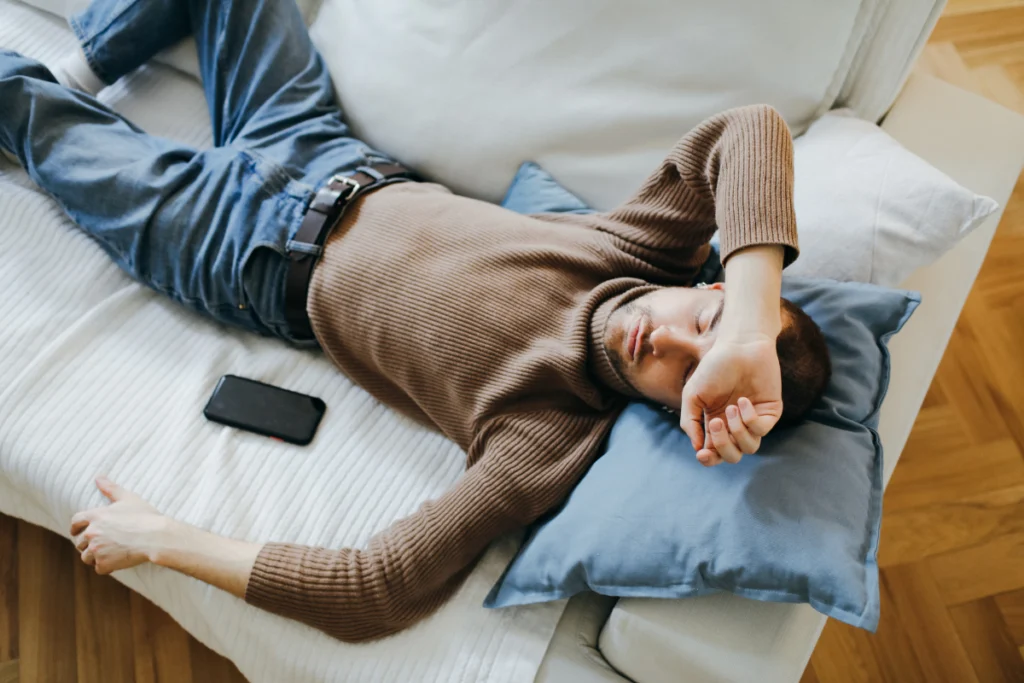
Not all moaning in sleep is catathrenia. Other causes include:
- Sleep talking: Sounds made while sleep talking are usually varied, include words or mumbling and occur at random rather than with each breath.
- Dreams: Vivid or upsetting dreams may cause occasional vocal sounds.
- Pain or discomfort: Physical discomfort can sometimes lead to groaning during lighter stages of sleep.
- Other sleep disorders: Conditions such as sleep apnoea or other parasomnias can produce unusual noises.
The pattern of the sound, especially whether it is linked to the out-breath and repeats in a regular way, helps tell it apart from these other causes.
What Causes Catathrenia?
The exact cause isn’t yet fully understood, and research into the condition is still limited. Several possible factors have been suggested:
Airway and Jaw Anatomy
Some studies have found that people with catathrenia are more likely to have a smaller lower jaw or a narrower upper airway. This may explain why some treatments that support the airway seem to help.
Upper Airway Resistance
It has been suggested that groaning may be the body’s response to increased resistance in the airway during sleep, with the prolonged breath out helping to keep the airway open.
Brain Control of Breathing
Another theory is that the groaning relates to how the brain controls breathing during certain sleep stages, particularly REM sleep.
Family History
Some people report relatives with similar night-time groaning, which suggests that genetics may play a part in some cases.
Stress, poor sleep and irregular sleep schedules have not been proven to cause it, but they may make sleep more fragmented in general.
Is Catathrenia Harmful?
For most people, catathrenia isn’t dangerous. It doesn’t usually lower oxygen levels or damage the body in the way that obstructive sleep apnoea can. The main impact tends to be on the bed partner, whose sleep may be repeatedly disturbed by the noise. This can lead to tiredness, relationship strain and embarrassment, particularly when sharing rooms on holiday or travelling with others.
Some people who groan at night do report feeling unrefreshed in the morning or tired during the day. In these cases, it is worth ruling out another sleep disorder, such as sleep apnoea, that may be present alongside the groaning.
How Is Catathrenia Diagnosed?
A diagnosis usually starts with a description of the sounds from a bed partner. A recording of the noises on a phone can be very helpful at your first appointment, as it allows a specialist to hear the pattern for themselves.
To confirm the diagnosis, a sleep study with audio and video recording may be recommended. This measures breathing, oxygen levels, brain activity and sleep stages, and it helps distinguish catathrenia from snoring, sleep apnoea and other conditions.
Catathrenia Treatment Options
Because the condition is generally harmless, treatment is usually only needed when the noise is disturbing a partner or when it occurs alongside another sleep problem. Catathrenia treatment options include:
Oral Appliance Therapy
A custom-made oral appliance, similar to a mandibular advancement device for snoring, holds the lower jaw slightly forward during sleep. Reports suggest this can reduce or stop groaning in some people, possibly by widening the airway. As the appliance is made to fit your teeth precisely, it is usually comfortable to wear and easy to use at home or when travelling.
CPAP Therapy
Continuous positive airway pressure (CPAP), which delivers air through a mask to keep the airway open, has been reported to reduce groaning in some people. It is more commonly used when catathrenia occurs alongside obstructive sleep apnoea.
Treating Related Sleep Disorders
If a sleep study reveals sleep apnoea or another condition, treating it may also improve the groaning and overall sleep quality.
How to Stop Groaning in Your Sleep
There’s no proven self-help method to stop it, but a few practical steps can make life easier while you seek advice:
- Record the sounds so they can be assessed accurately
- Keep a regular sleep schedule and aim for enough sleep each night
- Limit alcohol in the evening, as it relaxes the airway and can worsen snoring and apnoea
- Offer earplugs or a white noise machine to your partner in the short term
- Arrange a specialist assessment if the noise continues or you feel tired during the day
If you also notice other unusual night-time symptoms, such as biting your tongue in your sleep, mention these at your appointment too.
Getting Help in London
Night-time groaning can be confusing and embarrassing, but it is treatable. Dr Aditi Desai assesses snoring, sleep apnoea and other sleep-related breathing problems at her clinics in Wimpole Street, The Shard and Cromwell Hospital, and can advise whether a custom oral appliance may help reduce the noise.
To arrange a consultation, contact Dr Aditi Desai, dental sleep medicine specialist, and get a clear answer about what is happening at night.
Final Thoughts
Catathrenia is an unusual but generally harmless condition that causes long groaning sounds on the out-breath during sleep. It is often mistaken for snoring, yet the pattern of the sound and its timing set it apart. While there is no single cure, oral appliance therapy and CPAP have helped many people, and a proper assessment ensures that any related sleep disorder is not missed.
Frequently Asked Questions
What triggers catathrenia?
The cause isn’t fully understood. Factors such as jaw and airway anatomy, airway resistance during sleep and the way the brain controls breathing in REM sleep may all play a part.
Is catathrenia bad for you?
It’s generally considered harmless and doesn’t usually lower oxygen levels. The main effect is on a bed partner’s sleep, although tiredness during the day may point to another sleep disorder and is worth checking.
How do you fix catathrenia?
Treatment options include a custom oral appliance that holds the jaw forward and CPAP therapy. Treating any accompanying sleep apnoea can also help.
Is catathrenia the same as sleep apnoea?
No. Both are classed as sleep-related breathing disorders, but nocturnal groaning happens on the out-breath, while sleep apnoea involves pauses in breathing. Some people have both.
Why do I moan in my sleep?
Moaning can be caused by catathrenia, sleep talking, dreams or discomfort. A recording of the sounds and a specialist assessment can help identify the cause.
 Book Consultation