22.12.2025
Sleep is our most restorative human function – yet for people with sleep apnoea, night-time rest can become a battle between the body and the breath. When the airway collapses during sleep, breathing becomes shallow or stops completely. For many, the consequences spill into the day: morning headaches, exhaustion, brain fog, irritability, reduced concentration, and an overwhelming sense of not being fully alive. But what if one of the most powerful solutions lies in something as simple, natural, and accessible as how you position your body in bed?
Inspired by the compassionate, highly specialized insights of Dr. Aditi Desai, let’s explore the best position to sleep for apnoea – and why a thoughtful approach to posture can transform your nights and your quality of life. With her deep experience in sleep medicine and her dedication to personalized patient care, Dr. Desai helps individuals discover how positioning can support the airway, reduce obstruction, and create a more restful, soothing sleep environment.
Let’s walk you through the best positions to sleep in for sleep apnoea, why they work, how they influence breathing patterns, and how to adapt them to your unique body and sleep habits. With expert guidance and descriptive detail, you’ll learn how to reclaim sleep that nourishes your mind, body, and wellbeing.
Understanding Why Sleep Position Matters
Before exploring the best position to sleep for sleep apnoea, it is essential to understand how posture affects the airway. When lying down, gravity impacts the tongue, soft palate, and tissues of the upper airway. In people with obstructive sleep apnoea, these structures may fall backward, narrowing or fully blocking airflow.
Different sleep positions either worsen or alleviate this collapse.
Your body’s orientation can influence:
- Tongue position
- Jaw alignment
- Neck extension
- Airway stiffness
- Muscle relaxation
- Oxygen flow
This is why Dr. Aditi Desai emphasizes that choosing the best positions to sleep in for sleep apnoea is not just about comfort – it is a crucial component of therapy, complementing oral appliances, lifestyle changes, and professional treatment.
The Power of Side Sleeping: Dr. Desai’s Most Recommended Position
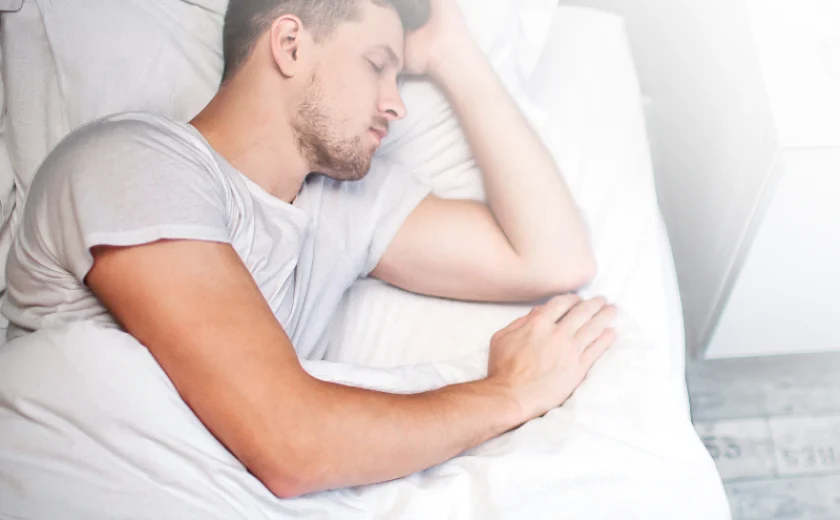
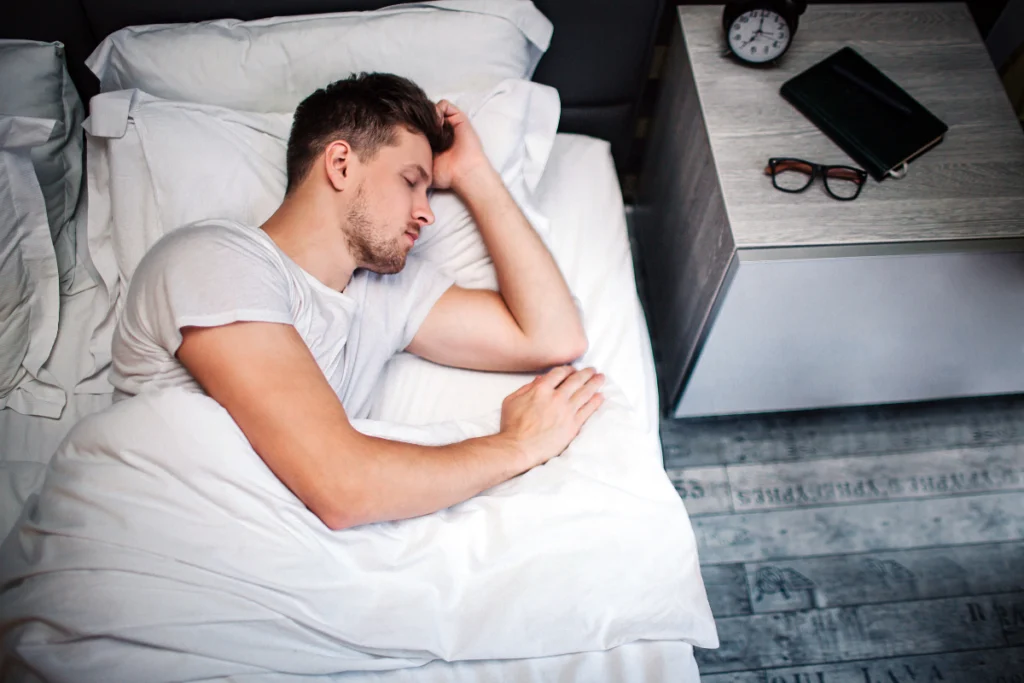
If there is one position that repeatedly stands out as the best position to sleep for apnoea, it is side sleeping. This posture naturally lifts the tongue away from the throat and creates more space at the back of the airway.
Why Side Sleeping Helps
Dr. Desai often describes side sleeping as a gentle repositioning of the body that allows the breath to flow easily again. When lying on your side:
- Gravity shifts the tongue forward instead of downward
- The jaw stabilizes more naturally
- The soft palate collapses less
- Air can move with less resistance
- Snoring reduces
- Apnoea events often decrease in frequency and intensity
Side sleeping can almost feel like breathing becomes lighter, smoother, and less strained.
Left vs. Right Side: Is One Better?
Both sides offer benefits, but many people find the left side particularly soothing, especially if they also struggle with acid reflux. Reflux can worsen sleep apnoea, and sleeping on the left can reduce stomach pressure on the oesophagus.
Yet the ultimate goal is not perfection – it is consistency. Any side sleeping position contributes to better airway stability and can easily become your best position to sleep for sleep apnoea if practiced nightly.
How to Make Side Sleeping More Comfortable
People unused to side sleeping often give up because of shoulder, hip, or back discomfort. Dr. Desai suggests:
- Using a supportive pillow to align the neck and spine
- Placing a pillow between the knees
- Hugging a body pillow to avoid rolling onto the back
- Choosing a mattress that cushions pressure points
These adjustments help maintain the position throughout the night, turning it into a restorative habit rather than an awkward experiment.
Why Back Sleeping Is Risky for Apnoea Sufferers
If side sleeping is the best position to sleep for apnoea, then back sleeping is usually the worst.
In the supine position (lying flat on the back):
- The tongue falls directly backward
- The jaw relaxes and slides toward the throat
- Soft tissues collapse with greater force
- Snoring intensifies
- Apnoea episodes lengthen and deepen
Back sleeping enlarges the conditions that already trigger airway obstruction, turning each breath into a struggle. For many sufferers, simply avoiding the back can significantly improve symptoms.
How to Break the Habit of Back Sleeping
Dr. Desai suggests a few clever techniques:
- Using a wedge pillow to elevate the torso
- Placing pillows behind the back
By gently training the body, back sleeping gradually becomes less common, allowing healthier positions to take over.
The Elevated Side Position: A Comforting Hybrid
For individuals with moderate or severe sleep apnoea, or those with nasal congestion, Dr. Desai often recommends elevating the head and upper torso. This hybrid posture – side sleeping combined with elevation – can be one of the best positions to sleep in for sleep apnoea because it offers dual benefits:
- Airway stability from side orientation
- Reduced the collapse due to gravity with elevation
How Elevation Helps the Airway
Elevation reduces gravitational pressure that would otherwise push tissues downward. It also:
- Improves nasal airflow
- Reduces snoring vibrations
- Helps people who breathe through the mouth
- Decreases fluid build-up in upper airway structures
This can make breathing feel lighter, almost as if the airway is being lifted rather than compressed.
Tools to Achieve Proper Elevation
- Adjustable beds
- Wedge pillows
- Stacked supportive pillows
- Orthopaedic sleep systems
The key is gentle elevation, not sitting upright – typically a 20–30 degree incline.
This position often becomes the best position to sleep for sleep apnoea for people sensitive to congestion, allergies, or sinus pressure.
Stomach Sleeping: A Surprising Alternative
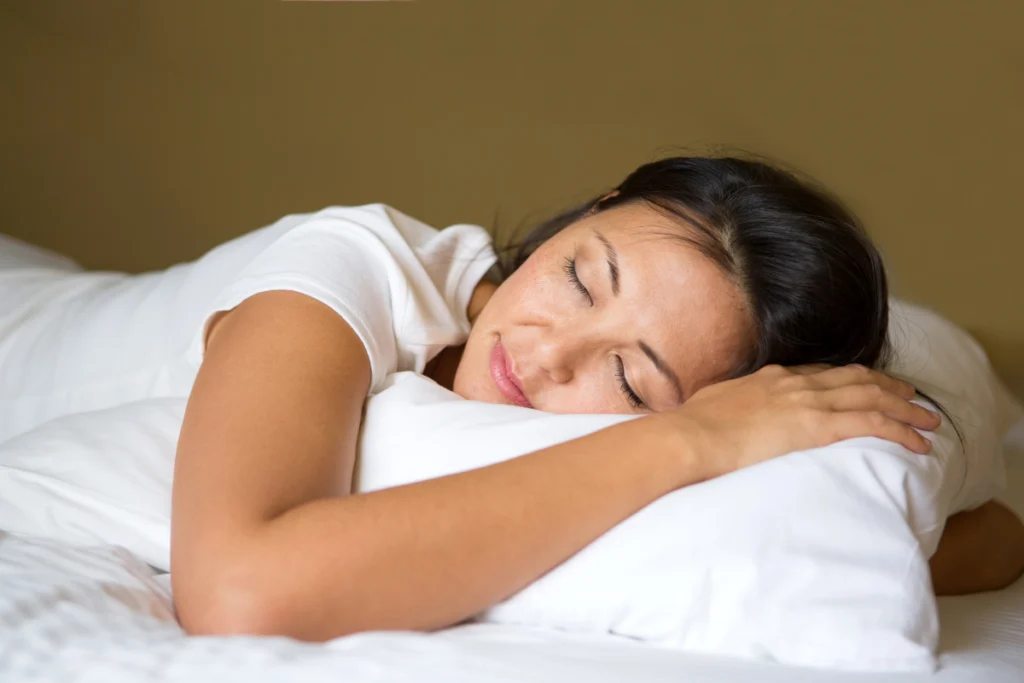
Although less commonly recommended, stomach sleeping can help some people with sleep apnoea. It is not usually the first choice, but for certain anatomical structures and airway patterns, it may become one of the best positions to sleep in for sleep apnoea.
Why It Can Help
Lying on the stomach pulls the tongue forward and away from the airway, much like side sleeping. For people who naturally sleep this way, forcing a switch may not be necessary.
Disadvantages
- Neck strain
- Lower back discomfort
- Restricted chest expansion
Dr. Desai typically recommends stomach sleeping only when it feels natural and does not create pain. With modifications – such as a thin pillow or no pillow – it can offer relief.
The Role of Pillows in Finding the Best Position to Sleep for Apnoea
Pillows are more than accessories—they are essential tools in shaping the airway posture.
Neck Alignment Matters
If the neck bends too far forward or backward, airflow suffers. A supportive pillow keeps the neck neutral, preventing airway constriction.
Dr. Desai’s Pillow Recommendations
- Medium-firm pillows for consistent support
- Contoured pillows for precise neck alignment
- Body pillows to prevent rolling
- Thin pillows for stomach sleepers
- Wedge pillows for elevation
The right pillow can transform a side or elevated position into the best position to sleep for sleep apnoea for your body type.
How Dr. Aditi Desai Tailors Sleep Position Advice
With this understanding, she guides individuals toward their personal best position to sleep for sleep apnoea rather than using generic recommendations.
Her approach is deeply patient-centred – warm, thorough, and empowering. Patients often describe a sense of relief, clarity, and confidence as they finally learn how their body behaves during sleep.
The search for the best position to sleep for apnoea is not just about body mechanics – it is about discovering a way of resting that feels natural, nurturing, and life-enhancing. With Dr. Aditi Desai’s guidance, individuals learn how to listen to their bodies, adjust gently, and create a sleep environment where breathing flows freely again.